
Angels Den
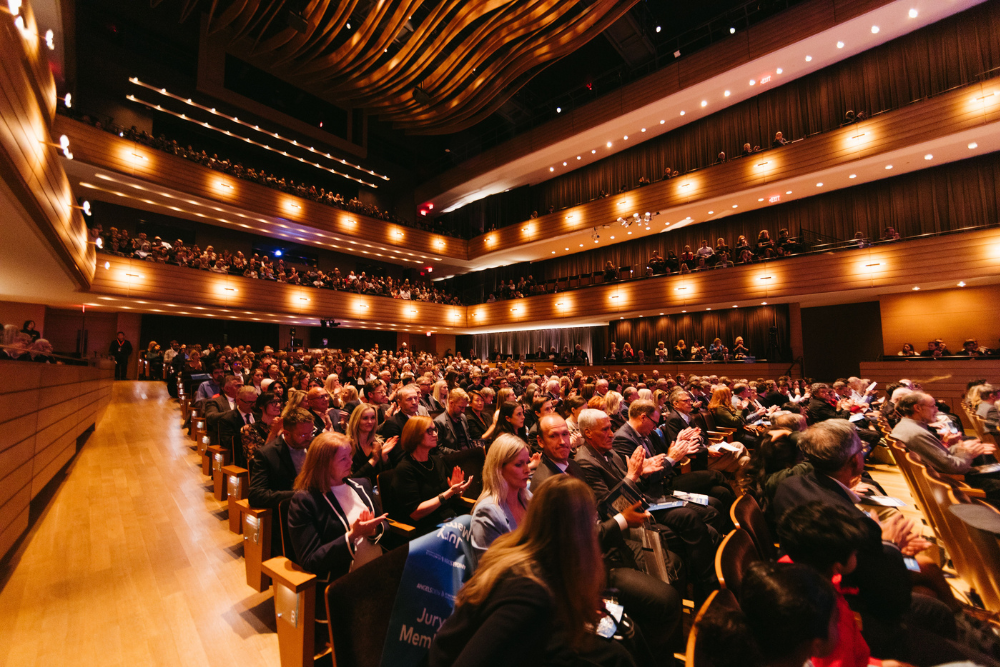
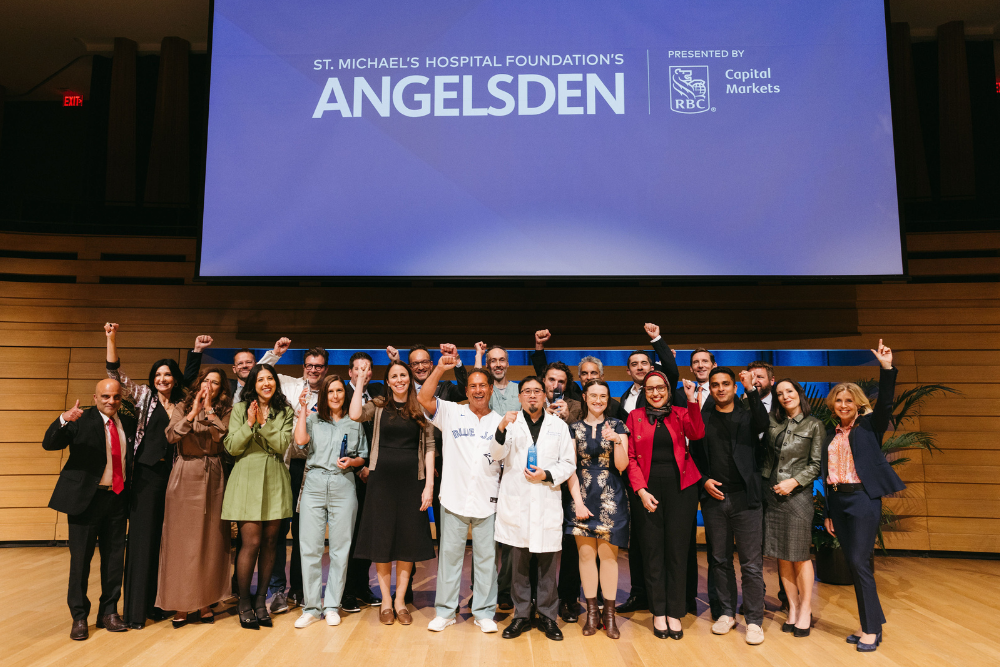
From a small classroom at St. Michael’s Hospital to a live show at Koerner Hall, Angels Den has grown to become Canada’s biggest medical research competition.
On Wednesday, November 4, 2026, St. Michael’s all-star scientists will pitch their life-changing ideas for a chance at winning critical research funding.
Get in touchThe Awards
Keenan Award for Medical Discovery
Transforming scientific discoveries into novel therapies, better diagnostics, vaccines or medical devices.
Mitchell Award for Health System Innovation
Improving our healthcare system by increasing its effectiveness, efficiency, equitability or sustainability.
Canada Life People’s Choice Award
Favourite research project in any category, voted for by the audience.
Sarah McComb Award for Cancer Research
Spurring research to improve the diagnosis and treatment of cancer.
Learn moreThe Baker Reilly Award for Powering Women in Research
Recognizes women-led innovation in medicine and health equity.
Learn moreMeet the Teams
Keenan Award for Medical Discovery
Old Drug, New Trick: Saving Muscle While Nerves Heal
Christina Doherty | Dr. Jane Batt
Christina Doherty
PhD Candidate, University of Toronto
Dr. Jane Batt
Clinician-Scientist, Keenan Research Centre for Biomedical Sciences, and Respirologist, St. Michael's Hospital
THE CHALLENGE: Replace with: Muscles need nerves to survive. When a nerve is severed in a workplace accident or car crash, the muscle it controls begins to deteriorate. Although nerves can regrow, the process is slow. In the meantime, cells called FAPs turn healthy muscle into fat and scar tissue, leaving it unable to function. By the time the nerve reconnects, the damage can be permanent.
THE SOLUTION: If FAPs can be blocked from turning muscle into scar tissue and fat, the muscle may stay healthy long enough for the nerve to grow back and trigger its own repair. Researchers have already found that an existing drug, PGE2, can prevent FAPs from causing this damage in lab-grown cells. The next step is testing to see whether PGE2 can maintain muscle health until the nerve returns.
Keenan Award for Medical Discovery
Concussion Comeback: Giving Ozempic a New Mission
Dr. Nathan Churchill | Dr. Tom Schweizer
Dr. Nathan Churchill
Scientist, Keenan Research Centre for Biomedical Science, St. Michael’s Hospital
Dr. Tom Schweizer
Scientist, Keenan Research Centre for Biomedical Science, St. Michael’s Hospital
THE CHALLENGE: Concussions are among the most common and poorly treated brain injuries. Millions of people around the world are affected each year, and many are left to manage their symptoms with little more than rest and reassurance. Currently, there is no proven drug to help the brain heal after a concussion.
THE SOLUTION: Medications that target GLP-1, used to treat diabetes, appear to protect brain cells after injury. Among them, semaglutide (better known as Ozempic) has been shown to fight inflammation and shield the brain from more damage. Patients in this study will be monitored while advanced MRI scans track what’s happening inside the brain. If Ozempic works, it will provide an accessible drug that gives an injured brain a chance to heal.
Keenan Award for Medical Discovery
Precision Pairing: Tailored Kidney Cancer Treatment
Dr. Rola Saleeb | Dr. Ken Pace
Dr. Rola Saleeb
Clinician-Scientist, Keenan Research Centre for Biomedical Science, and Pathologist, St. Michael's Hospital
Dr. Ken Pace
Surgeon-Investigator, Li Ka Shing Knowledge Institute, Urologist, St. Michael's Hospital
THE CHALLENGE: Immunotherapy has transformed cancer treatment. In kidney cancer, however, the many treatment options can make it difficult to know which to prescribe first, leading to unnecessary delays, side effects and healthcare system costs.
THE SOLUTION: We will take kidney cancer tissue and expose it to immunotherapy agents in the lab, watching the response in real time. Using a model that preserves the tumour’s conditions, we will build a picture of the precise biological signatures that predict success or failure, and match patients with the right drug the first time.
Mitchell Award for Health System Innovation
Healing Haven: Rethinking Recovery for People Experiencing Homelessness
Dr. Jesse Jenkinson | Dr. Stephen Hwang
Dr. Jesse Jenkinson
Adjunct Scientist, MAP Centre for Urban Health Solutions, Li Ka Shing Knowledge Institute, St. Michael’s Hospital
Dr. Stephen Hwang
Clinician-Scientist, MAP Centre for Urban Health Solutions, Li Ka Shing Knowledge Institute, Physician, General Internal Medicine, St. Michael’s Hospital, and Canada Research Chair in Homelessness, Housing, and Health
THE CHALLENGE: Across Canada, homelessness is rising, and the crisis plays out in emergency rooms and hospital wards every single day. Too often, people are discharged from hospital back onto the street, where recovery is nearly impossible. Without a safe place to heal, many become unwell again, trapped in a revolving cycle between hospitals, shelters, and homelessness.
THE SOLUTION: The Recuperative Health Space offers people experiencing homelessness a way out of that cycle. This new 18-bed transitional facility provides a safe, welcoming place to recover for patients experiencing homelessness who were discharged from St. Michael’s Hospital. A randomized controlled trial will track whether the Recuperative Health Space reduces total healthcare costs over the six months after discharge. If this new model works, it will become a life-changing blueprint for cities across Canada.
Mitchell Award for Health System Innovation
Safe Arrival: Using AI to Reduce Childbirth Risks
Dr. Nirmala Chandrasekaran | Dr. Alexandra Berezowsky
Dr. Nirmala Chandrasekaran
Physician, Obstetrics and Gynecology, St. Michael's Hospital
Dr. Alexandra Berezowsky
Clinician-Investigator, Li Ka Shing Knowledge Institute, and Physician, Obstetrics and Gynecology, St. Michael's Hospital
THE CHALLENGE: Timing the end of pregnancy is one of the most consequential decisions in obstetric care. As pregnancy advances beyond the full term of 40 weeks, the risks climb: stillbirth, emergency C-sections, hemorrhage, and more. Induction at 39 weeks can reduce many of these risks, but most patients would rather wait for labour to begin on its own. The problem is that we don’t know which babies are at risk and need to be delivered sooner and which ones are safe to wait for labour to begin naturally.
THE SOLUTION: By analyzing maternal and fetal data, our AI tool will identify which patients are unlikely to go into labour before 40 weeks, providing clinicians with the information they need to offer targeted early induction. The goal is to make more precise and personalized decisions in pregnancy and childbirth.
Mitchell Award for Health System Innovation
AI Compass: Navigating ICU Risk in Real Time
Dr. Bijan Teja | Dr. Michael Sklar
Dr. Bijan Teja
Clinician-Investigator, Li Ka Shing Knowledge Institute, and Physician, Cardiac Anesthesiology and Critical Care Medicine, St. Michael's Hospital
Dr. Michael Sklar
Clinician-Investigator, Li Ka Shing Knowledge Institute, and Intensivist, Medical Director, Medical Surgical ICU, St. Michael's Hospital
THE CHALLENGE: Every day in intensive care units, patients hover between life and death, and the warning signs are often invisible. A dip in blood pressure. A lab value that edges out of range. A medication that isn’t working. These clues signal that a patient is on the brink of crisis. But ICU teams are often overwhelmed by the hundreds of data points that pour in for each patient.
THE SOLUTION: AI Compass monitors vital signs, lab results, and treatment decisions in real time. The moment a patient’s risk of dying spikes, the AI tool alerts the care team, giving them time to escalate treatment or adjust medications. The impact could mean hundreds of deaths averted each year and fewer invasive procedures.
Meet the 2026 Host and Judges
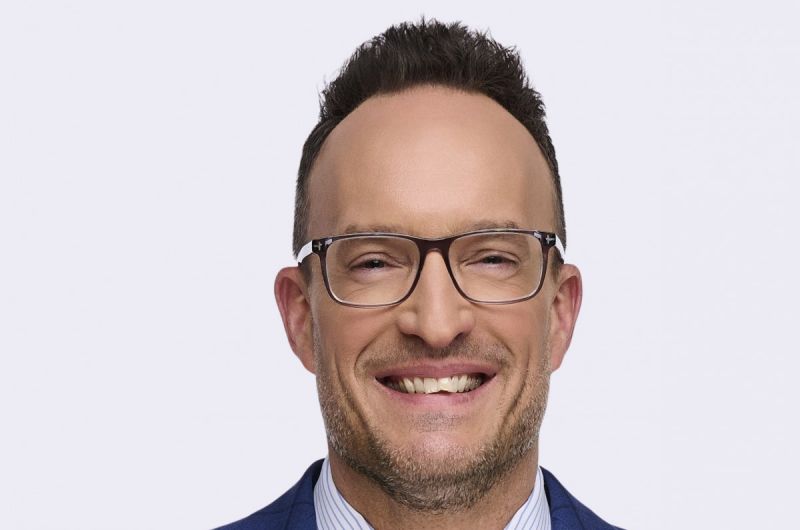
Nick Dixon - Host
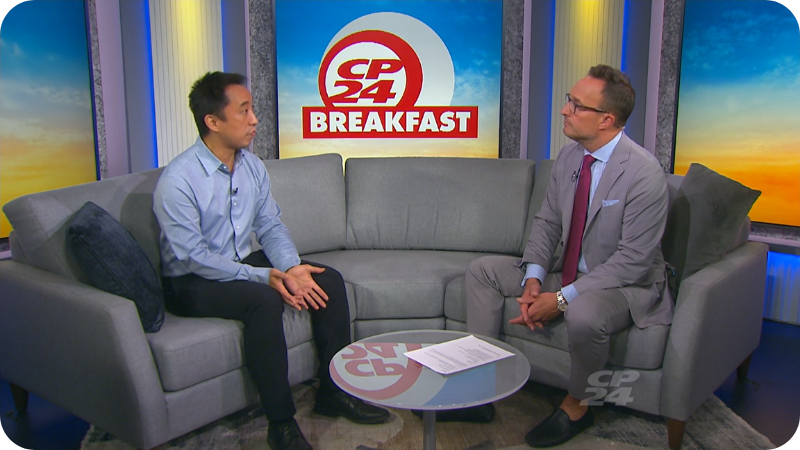
Nick Dixon is the co-anchor of CP24 Breakfast , Toronto’s #1 morning show—though fun fact, he’s not even a morning person. For more than 25 years, he’s been covering top stories and breaking news in the GTA and beyond, as well as reporting on some of the biggest events in Canada and around the world. Off-air, he’s busy chasing his three energetic kids and practicing his pickleball swing for Paddle Royale.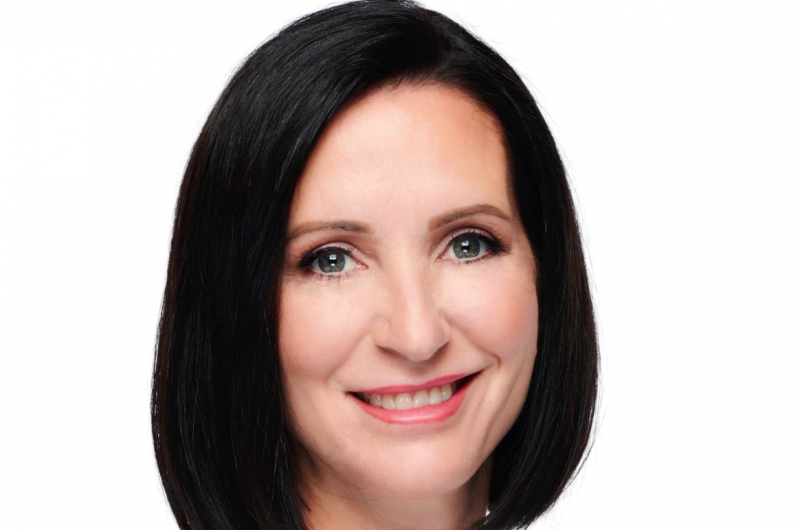
Amanda Lang - Judge
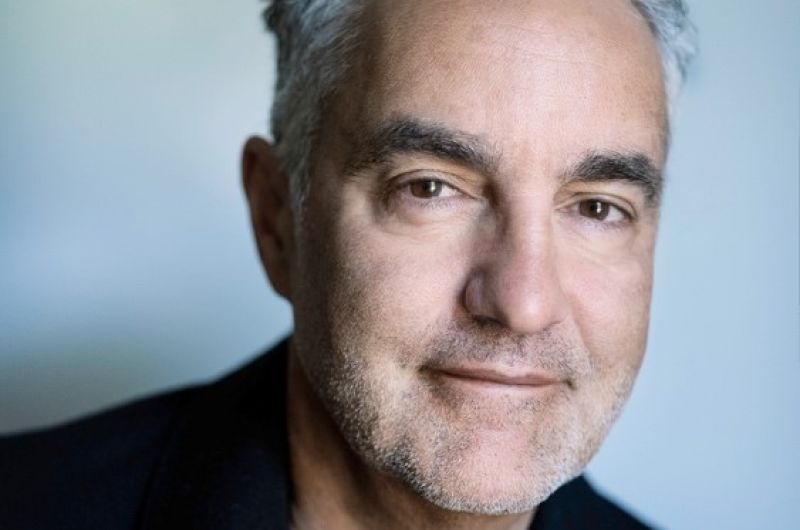
Bruce Croxon - Judge
Bruce Croxon made his mark as a digital trailblazer by co-founding Lavalife. Since selling the company, he’s stayed close to the action—investing in and advising a number of growing tech companies. Bruce spent three seasons on CBC’s hit show Dragons’ Den, and later co-founded Round13, an investment fund that helps Canadian tech businesses scale. He’s also a regular voice on BNN and, most recently, launched a charitable initiative called 13thround.life, using the sport of boxing to empower at-risk youth.
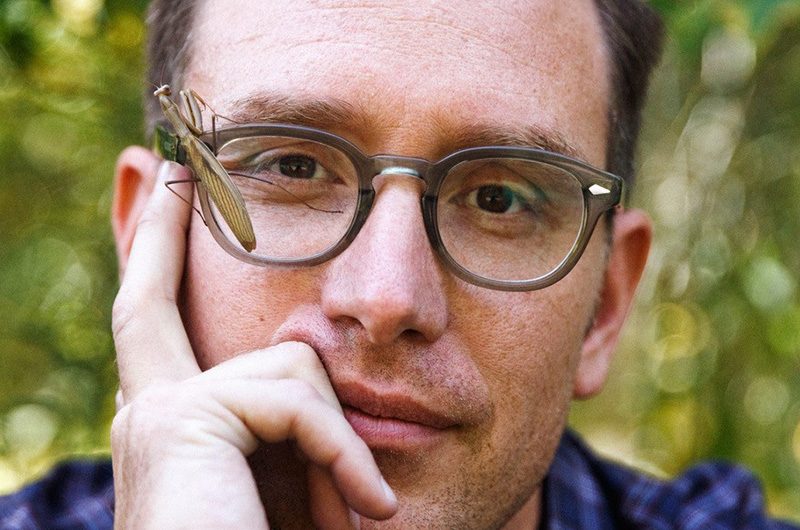
Dan Riskin - Judge
Dan Riskin, PhD, is a bat biologist, science journalist, author and speaker. He is best known as CTV’s Science and Technology Specialist, former co-host of Daily Planet on Discovery and author of the bestselling book Mother Nature is Trying to Kill You. When not leading wildlife tours in the tropics, or talking about science on the news, Dan spends time with his wife Shelby and three great kids. His first science book for kids, Fiona the Fruit Bat, was published in 2022.
Thank You To Our 2026 Sponsors
Presenting Sponsor
.png)
Keenan Award for Medical Discovery
Mitchell Award for Health System Innovation
People’s Choice Award Sponsor
.jpg)
Giving Moment Sponsor
.png)
Catalyst Sponsors






NextGen Sponsors
.png)

.png)

Research Champion Sponsors








.png)

Jurors
Rose Baker and Paul Reilly
Frank Balazic, PBY Capital
Lindsay Barwise
Amanda Billark
Dustin Brown
Keri Bush
Louise Cannon
Max Celej
Tony Cesta
So Hang Chan
Norma Croxon
The Hon. Nicky Eaton
Doug Farley
Lindsay Gobin
Marco Grimaldi
David Harvey
Jacquie Harvey
Marg Harvey
Patrick Harvey
Scott Harvey
Kelly-Ann Hewko
Sean Keenan
Elaine Kierans and Shawn McReynolds
Jarrett Leach
Barbara Lemaire
Susan Levesque
Jessica Longo
Jeffrey C. Lozon
Bob Macdonald, Bond Brand Loyalty
Mariana MacIntosh
Robert MacLellan
Jen MacRae
Maple-Brown Abbott Global Listed Infrastructure
Allison Martin
Jeff Martin
Liza Mauer
Joe Mazzocco
Andrew Mitchell
Brendan Mullen
Alanna Natale
Anne Natale
Joe Natale
Serena Natale
Jennifer Ngo
Jim Nikopoulos
Jonathan Pollack & Sacha Hayward
William M. Pringle
Gillian Riley
Tony Rodrigues
Ann Savege
Helen Sinclair
Harry Singh
Dan and Sandra Sullivan
Samantha Sykes
Frank Techar
Kristine Thompson
Rick and Judy Thorpe
U-Pak Group of Companies
Savita Verma
Tyler Weatherill
Stevie Weston
Tim Wilcox
Special Thanks To
Lloyd and Marie Barbara
Bill and Barbara Etherington
Colleen Johnston
Leon's
Liza Mauer and Andrew Sheiner
Pat Meneley
The Toronto Star
Wasatch Global Investors
St. Michael’s Hospital Department of Critical Care
St. Michael’s Hospital Department of Medicine
With Generous Support From

Our 2026 Committee
Melissa Martin, Co-Chair
Gillian Riley, Co-Chair
Caitlin Bryant
Max Celej
Dr. Erica Conte
Sean McCarthy
Wes McComb
Amit Monga
Bill Pringle
Dr. Ori Rotstein
Kate Yurincich


Join the Research Innovation Council
Want to go behind the scenes of medical research and launch a life-changing project? You can.
The Research Innovation Council is an exclusive group that chooses top scientists to receive RIC funding to launch their research projects. This is your chance to impact some of the toughest and timeliest health issues – like those you’re watching on Angels Den. Invest $10,000 per year over five years – and make medical ingenuity possible.
Learn moreCONTACT US
Media
Canadian medical devices improving outcomes for liver injuries
Healing from a liver operation can be tricky business. One doctor at St. Michael's Hospital in Toronto has been changing the game by developing new medical devices. Health reporter Katherine Ward gets an up-close look at how the devices work and the wider impact of these Canadian inventions.
Watch
Toronto doctors invent new tool to help dialysis patients avoid surgery
A pair of doctors has a new invention they say could change the game for people receiving home dialysis. Sometimes emergency surgery is needed for these patients, but a simple tool could be the ticket to staying out of the operating room. Health reporter Katherine Ward explains.
Watch
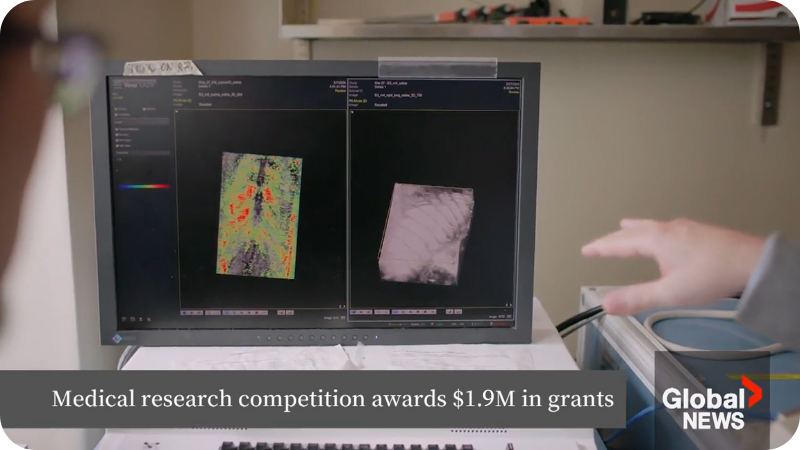
Scientists at St. Michael’s Hospital seek to revolutionize lung imaging
New technology is rethinking the way lungs can be imaged, thanks to a pair of scientists working at St. Michael's Hospital in Toronto. Health reporter Katherine Ward got a first-hand look at how their approach works.
Watch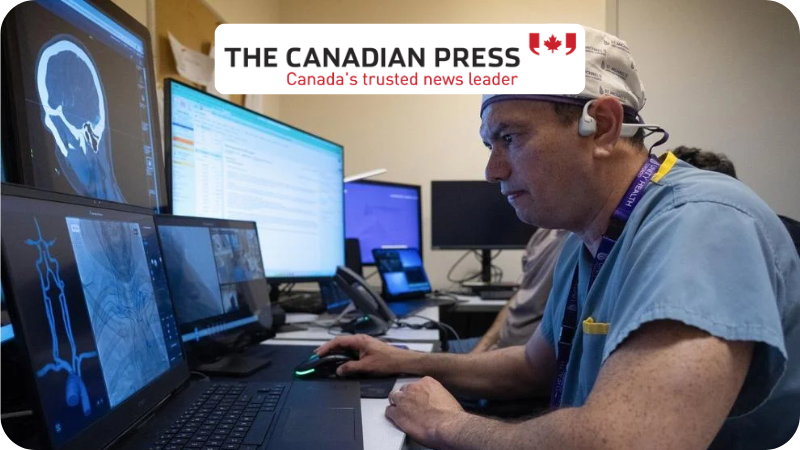
'Time is brain': Toronto hospital paving way for remote robotic treatment of strokes
A team at St. Michael's has successfully completed 10 brain angiograms using a robot controlled remotely by a neurosurgeon, paving the way to eventually providing critical stroke care to patients in northern Ontario.
Read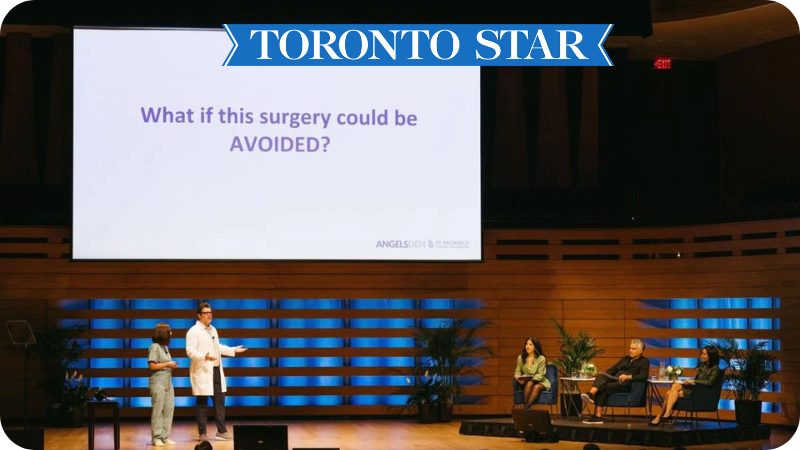
.png)
.png)
.png)
.png)
.png)
.png)
.png)
.png)
.png)
Past Winners
Keenan Award for Medical Discovery
Instant Insight: Bedside Imaging for Lung Injury
Eno Hysi, PhD | Dr. Warren Lee
Eno Hysi, PhD
Physicist and Scientist, Keenan Research Centre for Biomedical Science, and The Nicole and Thor Eaton-Canada Research Chair in Quantitative Ultrasound and Photoacoustic Imaging, St. Michael’s Hospital
Dr. Warren Lee
Critical Care Physician, Clinician-Scientist, Keenan Research Center for Biomedical Science, and Canada Research Chair in Mechanism of Endothelial Permeability, St. Michael’s Hospital
THE CHALLENGE: Acute respiratory distress syndrome (ARDS) is a serious lung condition that can develop following respiratory infections or trauma. Diagnosing and monitoring currently relies on X-rays and CT scans, which can be slow, imprecise, and carry risks related to patient transport and radiation exposure.
THE SOLUTION: Dr. Warren Lee and Eno Hysi have developed a bedside ultrasound device that makes diagnosing and monitoring ARDS faster, easier, and safer. This radiation-free technology uses light and sound to image lung oxygen levels in real-time, helping doctors respond more quickly and accurately.
Mitchell Award for Health System Innovation and Canada Life People's Choice Award
Unclogged: A Plumbing Fix for Dialysis
Dr. Monica Farcas | Dr. Jeffrey Perl
Dr. Monica Farcas
Urologist, Surgeon-Scientist, Li Ka Shing Knowledge Institute, and Agnico Eagle Mines Professorship in Minimally Invasive Urology and Endourology, St. Michael’s Hospital
Dr. Jeffrey Perl
Nephrologist and Clinician-Investigator, Li Ka Shing Knowledge Institute, St. Michael’s Hospital
THE CHALLENGE: Dialysis is a lifeline for people with kidney failure, removing waste and toxins from the body. Peritoneal dialysis involves filtering fluids through a catheter in the abdomen that gives patients the ability to receive treatment at home. However, if the catheter becomes blocked, the results can be devastating, requiring emergency surgery.
THE SOLUTION: Drs. Monica Farcas and Jeffrey Perl have invented the DialySnake, a device that quickly and effectively clears these catheters. No hospital stays. No costly surgery. No risky general anesthesia. It’s a safer, faster, and far more affordable alternative that could change the lives of dialysis patients.
E. & G. Odette Momentum Award
Pregnancy Protector: Targeted Care for Two
Luis Pérez Dávalos, MD | Dr. Hagar Labouta
Luis Pérez Dávalos, MD
PhD Student, Keenan Research Centre for Biomedical Science, St. Michael’s Hospital
Dr. Hagar Labouta
Scientist, Keenan Research Centre for Biomedical Science, and Keenan Professor in Medical Discovery, St. Michael’s Hospital
The Challenge: Three out of four pregnant women take medication—yet for 70 percent of those drugs, we don’t know if they’re safe for the baby. Even more concerning: one in 10 are known to cause harm, but doctors have no safer options to offer.
The Solution: Dr. Labouta and Pérez Dávalos, MD, are developing a breakthrough drug delivery system that targets treatment to the mother only, shielding the baby from potential unknown side effects. This innovation could transform care for a wide range of conditions—from cancer to epilepsy and more.
E. & G. Odette Momentum Award
Precision Psychedelics: Getting Treatment Right the First Time
Dr. Akash Goel | Dr. Katie Dunlop
Dr. Akash Goel
Anesthesiologist and Clinician-Investigator, Li Ka Shing Knowledge Institute, St. Michael’s Hospital
Dr. Katie Dunlop
Scientist, Keenan Research Centre for Biomedical Science and the Centre for Depression and Suicide Studies, St. Michael’s Hospital
The Challenge: Chronic neuropathic pain affects more than one in 10 Canadians, with many describing their experience as “worse than death.” More than half also struggle with major depressive disorder, making treatment more complex and often necessitating a long cycle of trial and error to find the correct therapy.
The Solution: Drs. Katie Dunlop and Akash Goel are developing a first-of-its-kind AI tool that classifies patients with chronic pain and depression based on the unique pattern of their brain activity, which acts like a neural fingerprint. These patterns can be used to predict which psychedelics (ketamine, MDMA, and psilocybin) will help each patient, offering more personalized care for those with chronic pain and depression.